

Don’t just follow your gut
You feel it before you can explain it. It’s an inner knowing that guides your decisions, brings clarity, and feels true, even when it makes no sense at all. Hard to explain. Even harder to defend.
But is it truly your own?
At a talk we attended on the future of design, the term “collective intuition” came up. The concept stayed with us.
We tend to think of intuition as something deeply personal, so how can it be collective? And if it is collective, how would that work?
In a moment when data can be analyzed faster and patterns can be replicated endlessly, much of the value we bring as designers is increasingly associated with taste, judgment, and human instinct. The ability to sense when something just feels right.
But what feels right is often what feels familiar. Our intuition is shaped by what we’ve experienced, by the references we’ve been exposed to, and by the cultural contexts we move within. In that sense, it is never neutral. It is inevitably biased.
This is where the idea of collective intuition comes in. When different perspectives, backgrounds, and sensibilities come together, intuition doesn’t disappear, it expands.
How meaning is formed
Humans rely on signs to make sense of the world. As designers, we communicate these signs. We reduce complexity into visual shortcuts that can be understood quickly through color, shape, typography, materials, and styles. These signals allow us to recognize, categorize, and interpret what we see, often without being conscious of it. Their meaning isn’t automatic, but built over time through repeated use, shared narratives, and historical and cultural context.
But shortcuts come with risks. When repeated often enough, meaning becomes naturalized. It stops being questioned.
This tension becomes especially evident when design is asked to represent a culture.
We both work in Milan as designers from abroad, one from Washington, DC, the other from Barcelona. Living and working in a different country pushes you out of your own bubble and into another. It highlights the gap between how a culture sees itself and how it is seen from the outside.
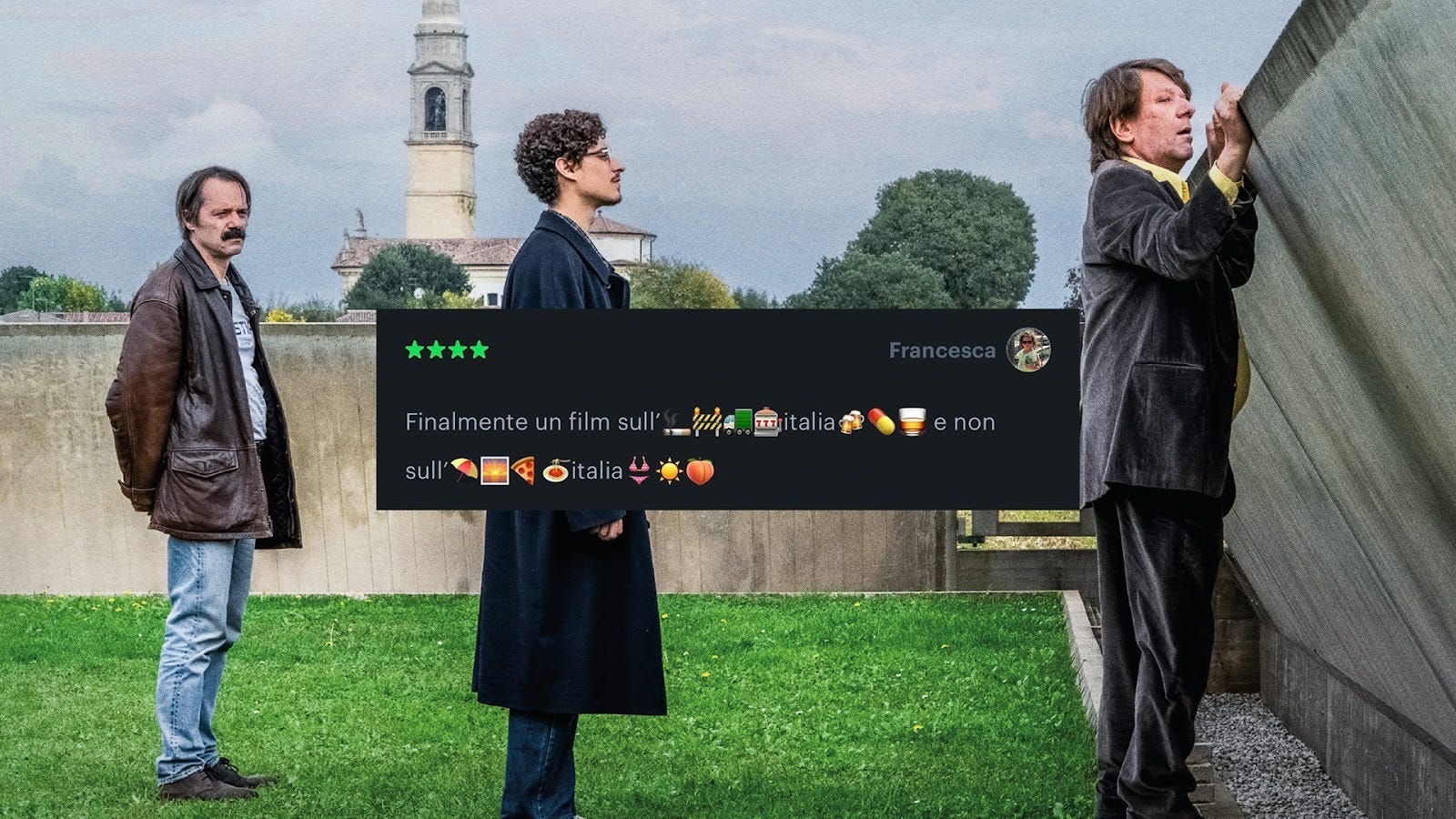
In the studio, we’re often asked by clients to make something that feels “Italian.” But what intuitively feels Italian?
What clients are really asking for is legibility. A visual translation of italianità. This translation inevitably involves simplification.
The question isn’t whether cultural cues should be used, but how.
Sometimes, ideas are dismissed because they feel too niche, too specific, too hard to translate for a broader, international audience. Choosing the familiar is easier.
But what if, instead of simplifying, we chose to go deeper? To broaden representation, rather than reinforcing what is already expected of a culture?
Branding and responsibility
In branding and communication, we don’t just reflect culture, we also participate in shaping how lifestyles, identities, and groups are perceived. Especially because branding operates at scale. It’s meant to be seen, repeated, and remembered. It doesn’t simply express cultural meaning, it amplifies it.
We carry a double responsibility. On one hand, we are responsible for how we work: how we translate ideas, visions, and cultures into legible visual systems. On the other hand, as individuals, we are also responsible for what we consume, because what we consume is what trains our taste, our judgment, and our intuition.
We believe embracing intuition is crucial in our work. At a time when automation and replication are becoming the standard, intuition is what keeps design human. As the world moves into sameness, intuition still leaves room for the unexpected.
The answer is not to abandon it, but to recognize its limits.
Psychologist Gerd Gigerenzer puts it this way:
“In my scientific work, I have hunches. I can’t always explain why I think a certain path is the right way, but I need to trust it and go ahead. I also have the ability to check these hunches and find out what they are about. That’s the science part.”
Intuition can guide us, but it needs to be questioned and checked, especially when the impact of our decisions goes beyond ourselves. There is a difference between trusting your gut in a personal decision and following a hunch when designing systems that will affect hundreds or thousands of people. The former is intimate. The latter is political.
When intuition carries this kind of impact, it can no longer remain a purely individual matter.
We need to create more space for conversation and collaboration. Across disciplines, cultures, generations. When different intuitions are shared, challenged, and interpreted collectively, something more meaningful can emerge.
The more you train your perspective, the better your intuition becomes. So watch films, view art, and read literature beyond your own cultural frame. Seek out voices that are often underrepresented or unfamiliar to you. Become a sponge.
And even then, don’t just follow your gut. Doubt more. Ask more. Listen more.
Intuition is only as strong as the patterns it has access to.
As Kant said, “There is the thing as it is, and there is the thing as we know it.” The space between the two is where culture, interpretation, and responsibility live.
Recommended Readings about Intuition and Taste:
“Subliminal: How your Unconscious Mind Rules your Behavior”, Leonard Mlodinow
“Gut Feelings: The Intelligence of the Unconscious”, Gerd Gigerenzer